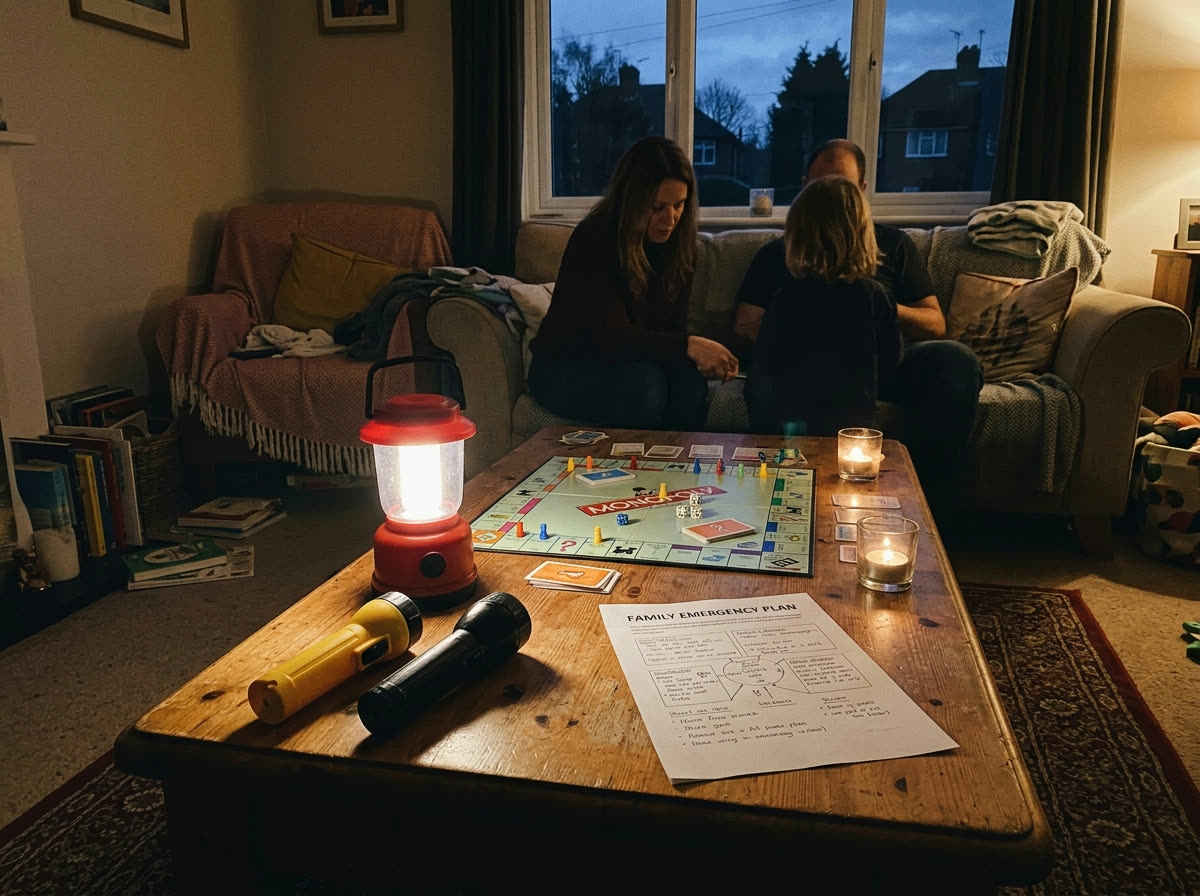
It started as a half-serious dare at the dinner table. The power had flickered three times that week, and during the third flicker our youngest cried because she couldn't find a flashlight in the dark. We realized that for all the bins of supplies in the garage, we had never actually practiced being without power. So we made a rule: once a month, on a night we picked in advance, we'd walk out to the panel and kill the main breaker for the whole evening. No grid, no cheating, just us and whatever we'd thought to prepare.
A year later, we've done it twelve times. It has become one of the most useful family habits we've ever built, and almost none of the value came from the parts we expected. We thought we were testing our gear. Mostly, we were testing ourselves.
The first drill was a disaster, and that was the point
The first time we flipped the breaker, the house went quiet and dark and we immediately discovered we had no idea where anything was. The flashlights we were sure we owned were scattered across three rooms, two had dead batteries, and one had been borrowed for a school project and never returned. By the time we'd assembled a working light source, fifteen minutes had passed and one kid had already barked a shin on the coffee table.
"This is the worst camping trip ever," our oldest announced, sitting on the kitchen floor holding the one headlamp that worked. We laughed, because he was right, and because it was so much better to learn this on a Tuesday we'd chosen than during a storm we hadn't.
What we learned: a drill that goes smoothly teaches you nothing. The disasters are the curriculum. We started keeping a running note on the fridge of every gap each drill exposed, and that list became our real preparedness plan, written in our own handwriting instead of borrowed from somebody else's checklist.
The gaps were never the ones we worried about
We had braced for big, dramatic problems and instead kept tripping over small, stupid ones. The recurring offenders were almost comically ordinary:
- We couldn't find our flashlights. Every single time, for the first few months. Lights migrate. They end up in junk drawers, car glove boxes, and under couch cushions.
- Phones died. We're all used to charging them whenever, so by 8 p.m. half the family was at 20 percent with no wall outlet coming to the rescue.
- We had no cash. One drill we decided to "order pizza" as if a nearby shop still had power, and realized we couldn't have paid for it. The card readers in our heads don't work when the registers are down.
- Nobody agreed on the meeting point. When we ran a version where we pretended we'd been separated, three of us walked to three different spots, each absolutely certain it was the family plan.
What it did to the kids
The change in our children was the part we never anticipated. The first couple of drills, the younger ones were genuinely nervous. The dark felt like something happening to them. By the fourth or fifth month, the whole tone had shifted. They started preparing for drill night during the day, laying out their headlamps, asking if they could be "in charge of the lantern."
They turned it into a thing they looked forward to. We played card games by lantern light, told stories, ate cold sandwiches and called it a picnic. Somewhere in there, the power being off stopped being an emergency and started being an evening. That reframing is the entire prize. When the grid actually went down for real last winter, our six-year-old's reaction was, "Oh, like a drill," and she went to get her headlamp without being asked.
"Are we doing this for real or pretend?" she asked during that real outage. We told her it was real. She thought about it for a second and said, "Okay, but it's the same." That sentence was worth a year of Tuesdays.
What we learned: kids don't absorb calm from a lecture about preparedness. They absorb it from repetition until the scary thing becomes boring. Boring is the goal. Boring is what safety feels like from the inside.
How we keep it safe and sane
A self-imposed blackout is only useful if it's genuinely safe, so we put guardrails on it early. We never touch anything tied to health or safety equipment. If anyone in your home relies on powered medical devices, a refrigerated medication, a stairlift, or anything similar, those stay on, full stop. The breaker drill is a learning exercise, not a test of endurance, and there is no prize for putting a real need at risk.
A few other rules made it sustainable rather than a chore:
- We pick the date together in advance, so nobody feels ambushed and bedtime routines still happen.
- We keep it to one evening, not overnight, especially with young kids and during temperature extremes.
- We always restore power before bed, and we always debrief for five minutes: one thing that worked, one thing that didn't.
- We keep a printed one-page family plan on the fridge, because phones die and a plan you can read by lantern light is the one that survives.
Honest caveat: we are not pretending a chosen Tuesday evening replicates a multi-day outage in a heat wave or a deep freeze. It doesn't. What it builds is fluency with the basics, the muscle memory of finding light, staying calm, and knowing where to gather. The hard scenarios still deserve real planning. But you handle the hard ones far better when the basics have stopped scaring you.
A year in, the dark got smaller
The single most valuable thing the drills gave us isn't on any supply list. It's that an outage no longer hijacks the mood of the house. The flashlights have a home now. Everyone knows the meeting point. There's cash in a labeled envelope. The phones get topped off on drill day out of habit. And when the lights go out for real, the dominant feeling isn't fear, it's a slightly bored competence, the same way a fire drill at school turns a terrifying idea into a line you walk in.
If you try one thing from all of this, make it the first disastrous drill. Pick a night, tell your family, and turn off the lights on purpose. You'll be a little embarrassed by what you can't find. Write it down, fix one thing, and do it again next month. A year from now the gaps will be closed, your kids will be the calm ones, and a power outage will have quietly become the most boring kind of adventure you can have at home. That, it turns out, is exactly what being prepared is supposed to feel like.