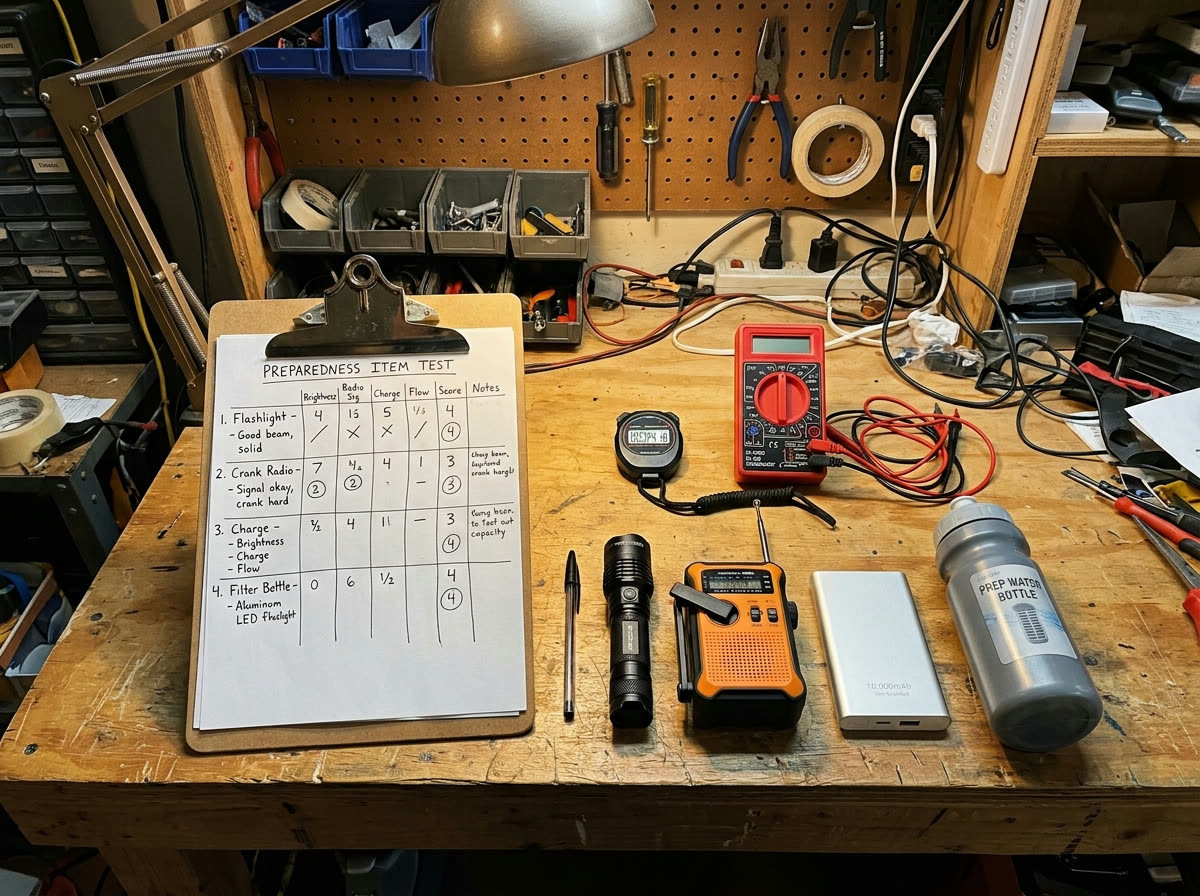
When the power is out and the shelves are bare, "good enough" gear is the only kind that matters. That is the bar we hold ourselves to at Prepared American. We are a small team of preparedness enthusiasts who got tired of glossy product pages, paid placements dressed up as journalism, and "best of" lists written by people who never took the thing out of the box. So we built the resource we wished existed: honest, hands-on evaluations of the gear families actually rely on when things go sideways.
Testing preparedness gear is different from testing a blender. The whole point of this equipment is that it works on the worst day of your year, in the dark, when you are cold, tired, and a little scared. A water filter that clogs after a weekend or a stove that needs perfect conditions to light is not a minor inconvenience in an emergency. It is a failure. So we test the way you would actually use the gear: under pressure, over time, assuming nothing else is going right. Here is how we do it, where our money comes from, and what we are not.
How we choose what to test, and where it comes from
We do not test everything, and we do not chase whatever is trending. We start with the questions real families ask us and the categories that matter when the grid blinks out: clean water, light, warmth, power, communication, first aid, and food storage. From there, we build a shortlist the boring, honest way:
- We map the category and identify the gear most households are likely to own or encounter.
- We read the spec sheets and manufacturer claims, then flag the ones that beg to be verified.
- We browse owner reviews for the failure modes that show up again and again.
- We prioritize gear at price points normal people actually pay, not just the trophy items.
Then we buy it. We purchase the vast majority of what we test with our own money, at retail. Manufacturer "review units" are sometimes cherry-picked, and a closet full of free gear has a quiet way of softening verdicts. Buying our own keeps us honest and free to say a product is not worth it. Once it arrives, we do not run a checklist for an afternoon and call it done. We live with the gear for weeks, using it on ordinary days until its quirks reveal themselves. Most products fail us slowly, not dramatically, and you only catch that by sticking with them.
A spec sheet tells you what a product is supposed to do. Three weeks of using it in your kitchen, your yard, and your car tells you what it actually does. We trust the second one.
How we score
Every product is judged against the same five criteria. We weight them by category, but all five are always in play.
Reliability
Does it work every single time, or only when conditions are kind? We look for consistency across repeated use, in heat and cold, wet and dry. Anything that needs coaxing loses points fast, because emergencies do not grant do-overs.
Ease of use under stress
We test as if it is 2 a.m., the power is out, and your hands are cold or gloved. Can you operate it in the dark, by feel, without the manual? Fussy menus and tiny buttons are not just annoyances when adrenaline is high; they are safety risks.
Value
Not "cheap," but honest value for the money. We ask whether the price is justified by real performance, and whether a product half the cost does nearly the same job. Sometimes the budget pick wins; sometimes spending more buys peace of mind. We will tell you which.
Durability
Gear that lives in a bin for years and gets used hard for a weekend has to survive both neglect and abuse. We stress hinges, zippers, seals, and housings, and note the build quality that suggests a product will still work after sitting untouched for a season.
Real-world performance vs. box claims
This is where a lot of products quietly fall apart. We measure runtimes, flow rates, brightness, and capacity ourselves and compare them to the marketing. A flashlight rated for twelve hours that delivers four gets called out.
How we pressure-test in the real world
Bench numbers only tell part of the story, so we put gear into the conditions it is meant for. We run our own drills, time ourselves under simulated outage conditions, and, whenever an actual outage or storm gives us the chance, we use the gear for real. That means filtering creek water and drinking it, cooking a full meal on a backup stove in wind and cold, running a power station down to empty to learn its true capacity, and living off a flashlight with the breakers off. The gear that earns our recommendation has had a genuinely bad day at our hands and kept working.
Our independence, and what we are not
Let's be direct about money, because trust depends on it. Some of our links are affiliate links, and if you buy through them we may earn a small commission at no extra cost to you. That funds the gear purchases and the time this work takes. Here is the firewall that protects you: affiliate relationships have zero influence on our verdicts. The person testing a product does not factor in whether it pays a commission, and no commission is high enough to buy a recommendation. We rate plenty of products we earn nothing on, steer readers toward cheaper options that pay us less, and routinely tell you to keep your wallet closed. If a paycheck and an honest verdict ever conflict, the verdict wins. Every time.
We owe you the same honesty about our limits. We are dedicated preparedness enthusiasts and careful, methodical testers. We are not emergency-services personnel, paramedics, doctors, or survival instructors. Our reviews can help you choose reliable gear, but they cannot teach you the skills that gear depends on, and that distinction is genuinely important to your safety:
- Read the manuals and warnings that come with your equipment, every time.
- Seek hands-on training from qualified instructors: a real first aid and CPR course, water safety, fire safety, whatever fits your plan.
- Practice with your gear before you ever need it, so the learning curve does not happen during the emergency.
- Treat our recommendations as a starting point for your own judgment, not a substitute for it.
The best filter in the world will not help someone who has never set it up. Buy good gear, then learn to use it from people qualified to teach you.
The bottom line, and how to reach us
Our method comes down to a simple idea: we will not tell you to trust a piece of gear with your family's safety unless we have trusted it with our own. We buy it, live with it, try hard to break it, score it against the same honest criteria every time, and publish what we find, commissions be damned. Then we hand you the limits of what a review can do and point you toward the training that fills the gap.
We are a small team and we make mistakes, so we want to hear from you. If a product behaved differently for you, if a spec changed, if you spotted an error, or if there is a category you wish we covered, reach out through our contact page. We read every message, update articles when the facts change, and correct mistakes openly. Reader reports often shape what we test next. That is the deal, and we intend to keep earning it.